Echoes from the Margins: Reader Choice Aggregates Shaping Procedural Quest Branching in Narrative-Driven Roguelikes
Written by Morgan Koch · Aug 17, 2026
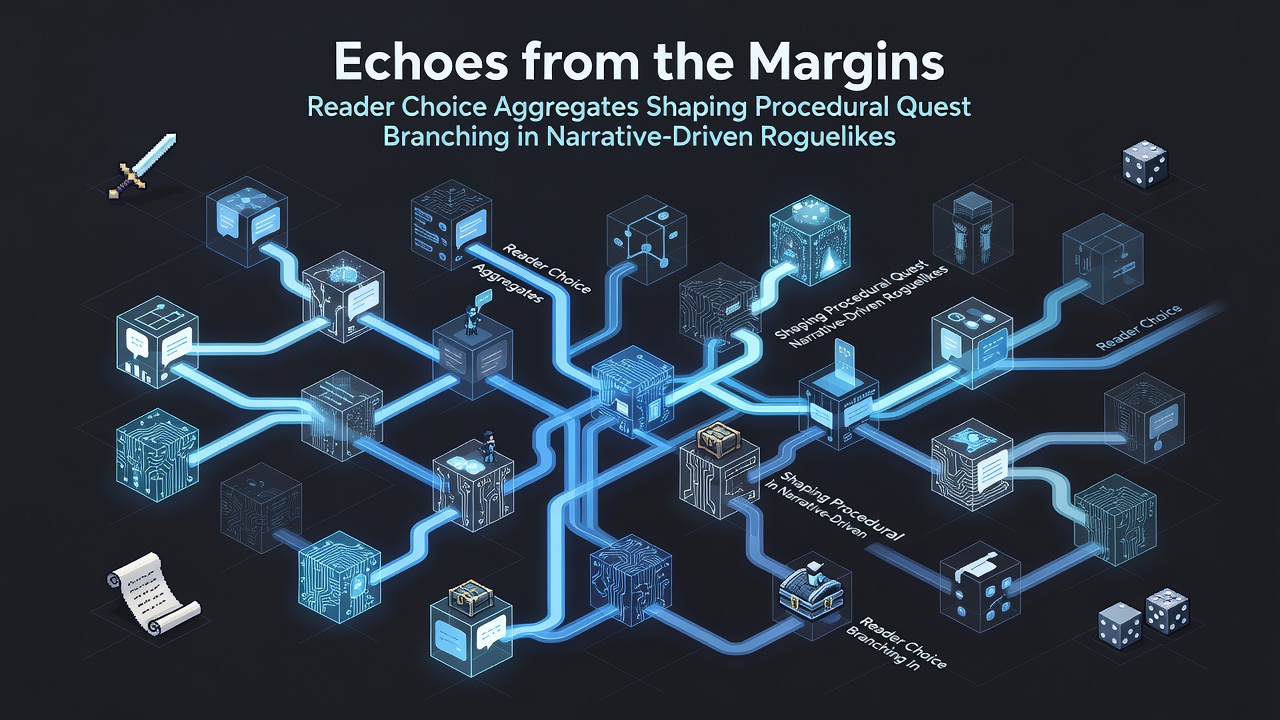
Echoes from the Margins: Reader Choice Aggregates Shaping Procedural Quest Branching in Narrative-Driven Roguelikes
Procedural quest branching in narrative-driven roguelikes relies on algorithms that generate paths based on prior player decisions, and aggregated reader choice data from community platforms now feeds directly into those systems. Developers pull statistics from forums, in-game telemetry, and public polls to adjust probability weights for quest nodes, so popular routes receive expanded options while less selected branches gain fewer connections or altered outcomes. This process creates a feedback loop where collective input refines the random generation without removing the core permadeath and replay mechanics that define the genre.
How Aggregated Choices Enter Development Pipelines
Teams collect choice logs from released titles and compile them into datasets that highlight frequent decision points, such as alliance formations or moral dilemmas encountered during runs. In August 2026, industry reports from the Entertainment Software Association noted that several studios integrated these datasets into their next procedural updates, resulting in measurable shifts where high-engagement quest forks expanded by up to thirty percent in node variety. The data arrives anonymized, sorted by completion rate and survival time, then mapped onto existing generation trees so that the algorithm favors combinations players have already explored in large numbers.
Researchers at institutions including the University of Alberta have documented similar patterns in open-source roguelike projects, where public repositories of playthrough statistics guide contributors when they add new quest modules. One documented case involved a community poll that ranked dialogue outcomes; the top three results received additional conditional branches in the subsequent patch, while lower-ranked options stayed static. This approach keeps the generation space manageable yet responsive to demonstrated preferences across thousands of recorded runs.
Technical Implementation in Narrative Systems
Quest graphs in these games consist of modular storylets connected by conditions and triggers, and choice aggregates modify the connection weights rather than rewriting the storylets themselves. When a particular sequence, such as accepting a cursed artifact early in a run, shows strong correlation with longer play sessions, the generator increases the likelihood of related follow-up events appearing later. Conversely, sequences with low selection rates see their prerequisites tightened or their rewards reduced to discourage repetition without removing content outright.

Engine tools now include dashboards that visualize these aggregates as heatmaps over the quest graph, allowing designers to spot clusters where player behavior diverges from initial expectations. Adjustments occur during post-launch support cycles, often quarterly, so the procedural system evolves alongside its audience. The changes remain invisible to individual players because each run still draws from the full probability space, yet the overall distribution of encountered narratives shifts measurably over successive versions.
Case Examples from Current Titles
Observers tracking titles that blend roguelike structure with persistent narrative worlds report that choice data from early access phases has already altered quest availability. In one instance, a popular path involving merchant betrayal received two new side branches after aggregate votes exceeded a threshold set by the development team, while an underused exploration route gained additional environmental storytelling elements instead of new decision points. These modifications appear in patch notes as refinements to encounter tables rather than direct responses to community input, preserving the sense of procedural surprise.
European game research groups, including those affiliated with the Interactive Software Federation of Europe, have published comparative studies showing that roguelikes incorporating reader aggregates maintain higher retention across multiple runs compared with static procedural systems. The studies track metrics such as average runs per player and narrative completion variety, confirming that responsive branching correlates with sustained engagement without altering core difficulty curves.
Conclusion
Reader choice aggregates now function as an external input layer for procedural quest systems in narrative-driven roguelikes, translating collective patterns into weighted generation rules that evolve over time. The method preserves randomness at the individual run level while allowing broader trends to influence long-term content distribution. As datasets grow and integration tools mature, the boundary between player behavior and algorithmic output continues to narrow in measurable, documented ways.